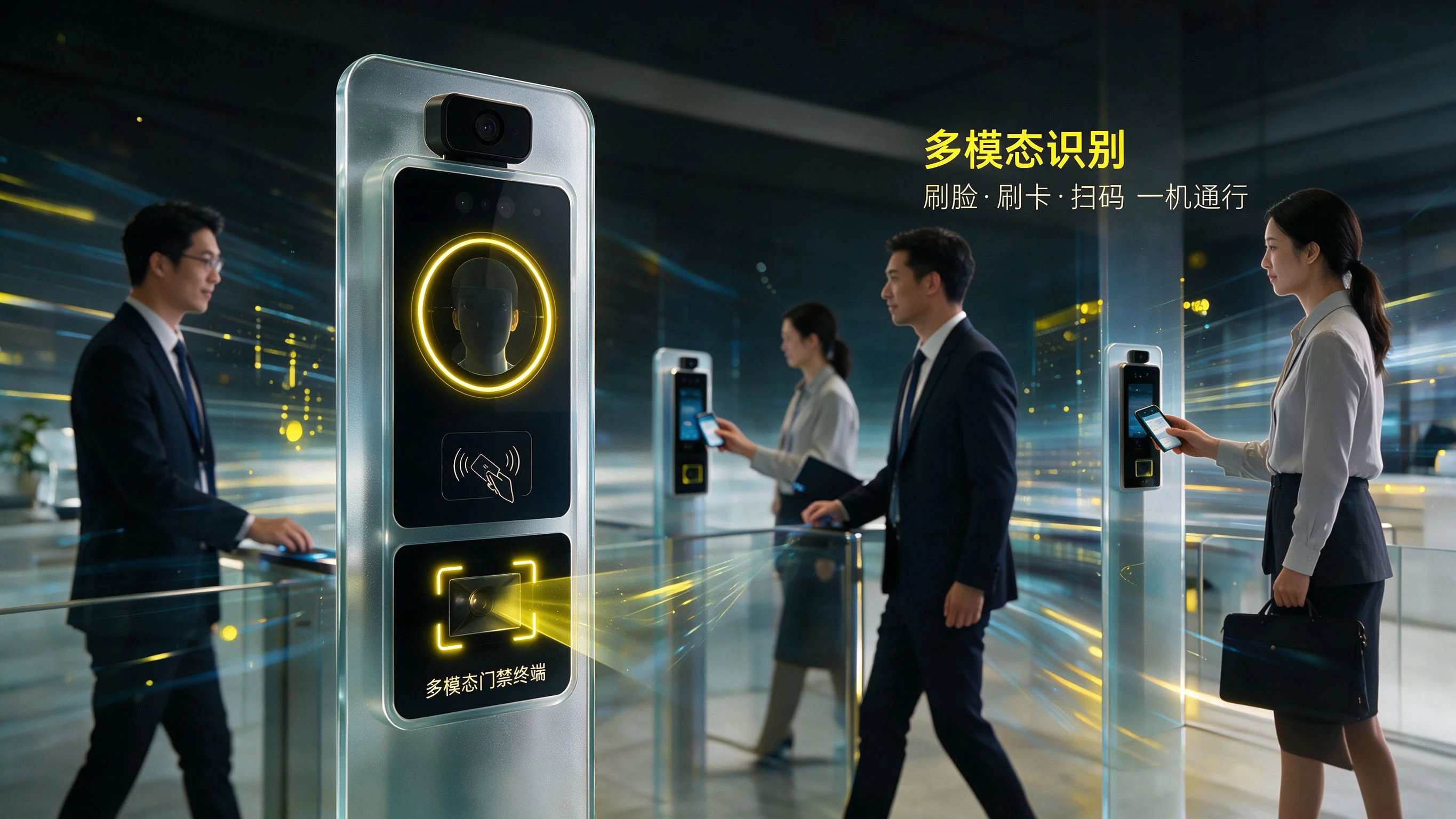
Multimodal Recognition
Face, QR and card multi-mode recognition meets diverse scenarios; binding information to persons prevents identity fraud. One-card-one-key provides high security, with convenient one-person-multi-card distribution.
Organization & Permission Management
Multi-level enterprise management with data isolation; group enterprises configure multi-level subsidiary sub-management; multi-mode permission delivery with grouped or per-person management; access, operation-log and alarm records instantly queryable for business-level data security.
Integrated Linkage
Supports shifts and fixed schedules with attendance groups; proactive visitor invitation and visitor-apply-approval modes; hall and car calls; real-time monitoring where device maintenance does not affect permissions — synchronized visitor, attendance and passage management.
FAQ
How much does an enterprise access control system cost?
Depends on site count, lane count and integration depth: a single-campus facial system starts in the tens of thousands; a group with many sites plus a private platform needs a quote by scale and integration. Map your org and permission model first, then evaluate.
Can it integrate with our existing HR or attendance system?
Mature enterprise access uses a platform as the hub and connects with HR, attendance and OA, auto-syncing permission changes with personnel moves. Confirm the vendor’s open-interface capability when selecting.
Can we reuse existing IC cards and old turnstiles?
Yes. The solution is compatible with existing cards and devices, protecting prior investment while transitioning in parallel to face or QR multimodal — no need to start over.
How do we manage multiple branches centrally?
A group-level platform supports unified multi-org, multi-region modeling: HQ pushes permission policies, branches execute, and every site’s status and logs are visible centrally.
How are data security and compliance ensured?
Sensitive units can deploy privately so data stays in-domain; faces are encrypted at rest with clear retention, complying with PIPL and China’s MLPS (Multi-Level Protection Scheme) requirements.