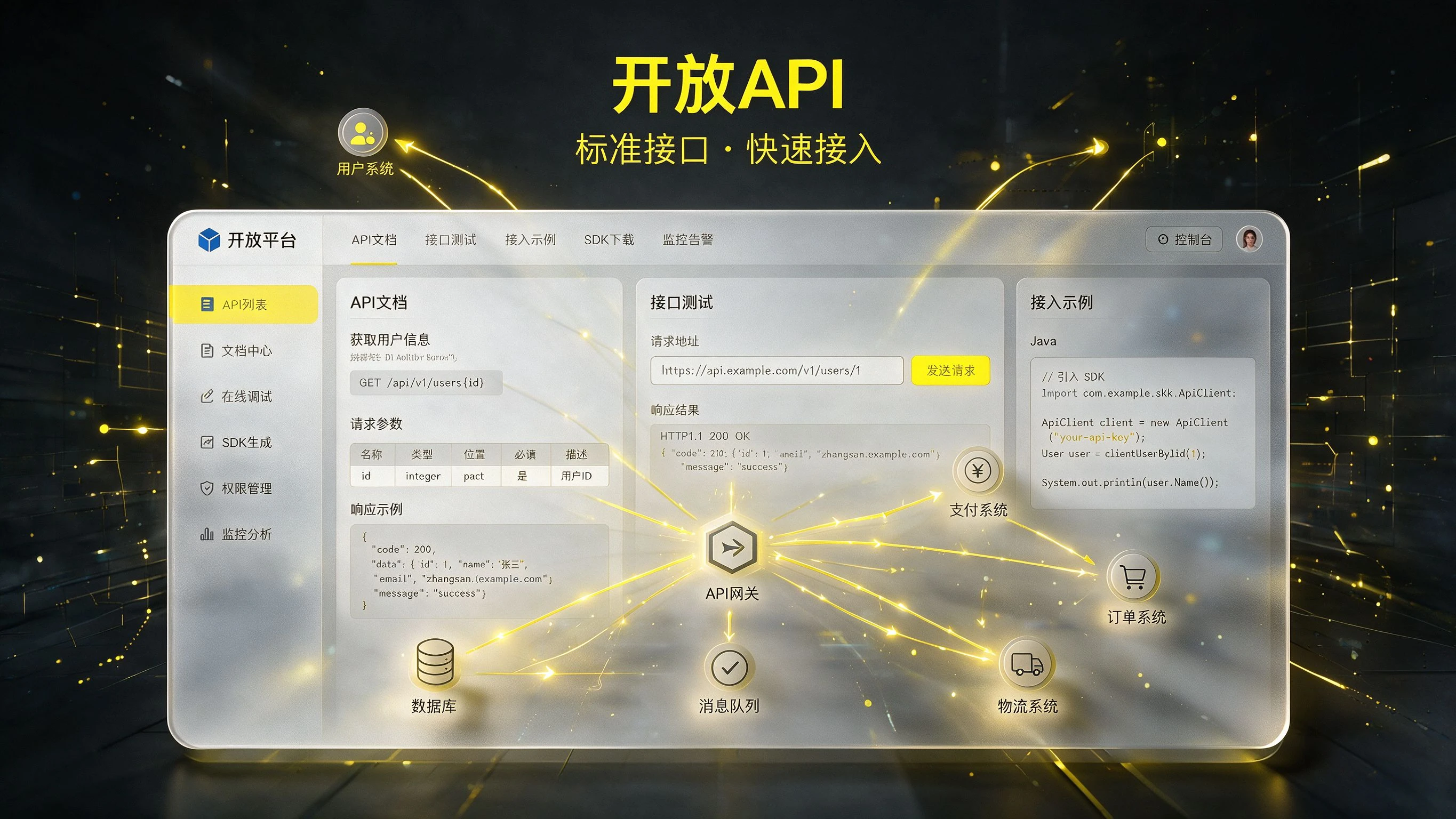
Open API
Open APIs, SDKs, low-code orchestration and a sandbox make common automations visually configurable; device abstraction unifies multi-vendor terminals, hiding hardware differences so one logic layer manages all.
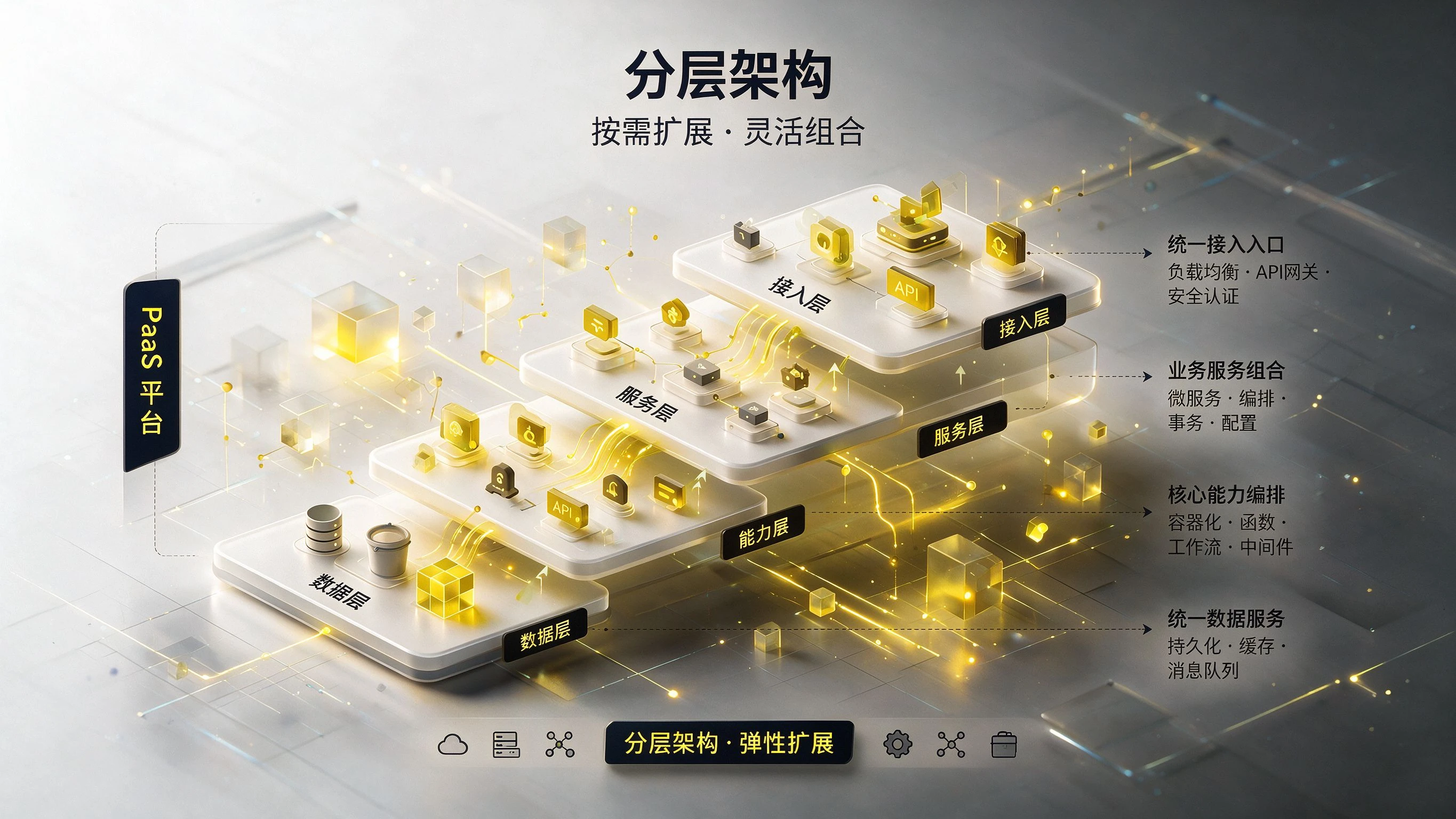
Layered Architecture
Access, service, capability and data layers are decoupled for on-demand extension; a unified access entry supports multi-terminal connection; business services are orchestrated by scenario, and data interoperability breaks information silos.
Private Deployment
PaaS can run on a private base, combining open development with data staying in-domain for regulated units; suited to enterprises with development capability or deep customization needs — large firms, integrators and OEMs.
FAQ
Who is access-control PaaS for?
Mainly system integrators, industry ISVs, and enterprises that want to embed access control into their own platforms — scenarios needing custom development and multi-system fusion.
What is the difference between PaaS and SaaS?
SaaS is a ready-to-use standard service; PaaS provides open APIs and orchestration at the base layer for developers to build their own apps — suited to customization and fusion.
Can it connect devices from different brands?
Yes. PaaS uses device abstraction to unify multi-vendor terminals, hiding hardware differences so one logic layer manages all.
Is the development threshold high?
We provide open APIs, SDKs, low-code orchestration and a sandbox; common automations can be configured visually, reducing custom development.
Can it be used together with private deployment?
Yes. PaaS can run on a private base, combining open development with data staying in-domain for regulated units.