




If you can write JavaScript, you can build device applications.
DejaOS is built on customized Linux and lets business apps be written in JavaScript and run on adapted smart terminals. Ordinary business-app development needs no firmware team and no compile-and-flash waits — app updates ship like an app release.
Explore DejaOS
Low Entry Barrier
Frontend engineers, building device apps from day one.
A lightweight QuickJS engine runs standard JavaScript directly on embedded Linux smart terminals. Business code is written in JS — no C, no firmware low-level — your existing front-end team can join device-side business development.
Full Hardware Access
Call wrapped hardware capabilities from JS.
GPIO, UART, RS485, Wiegand and more I/O are callable via modules; 50+ hardware APIs out of the box. Serial comms, access control and sensor reads are implemented with JS components; exact capabilities depend on the device model and installed modules.
Visual UI Development
Build device UI with JavaScript.
The built-in LVGL graphics framework lets you control layout, animation and interaction from JS. Business logic and interface live in one codebase; update the app to apply changes — on-device rendering should still be verified on real hardware.
Native Connectivity
Network modules ready to use.
MQTT, HTTP, NTP and other network modules are ready to use; apps call them to integrate backends, report data and enable remote control, skipping the work of building communication layers from scratch. Exact network capabilities depend on the device model and modules.
On-Device Face AI
On-device face recognition — works on weak/offline networks (capacity & speed per model).
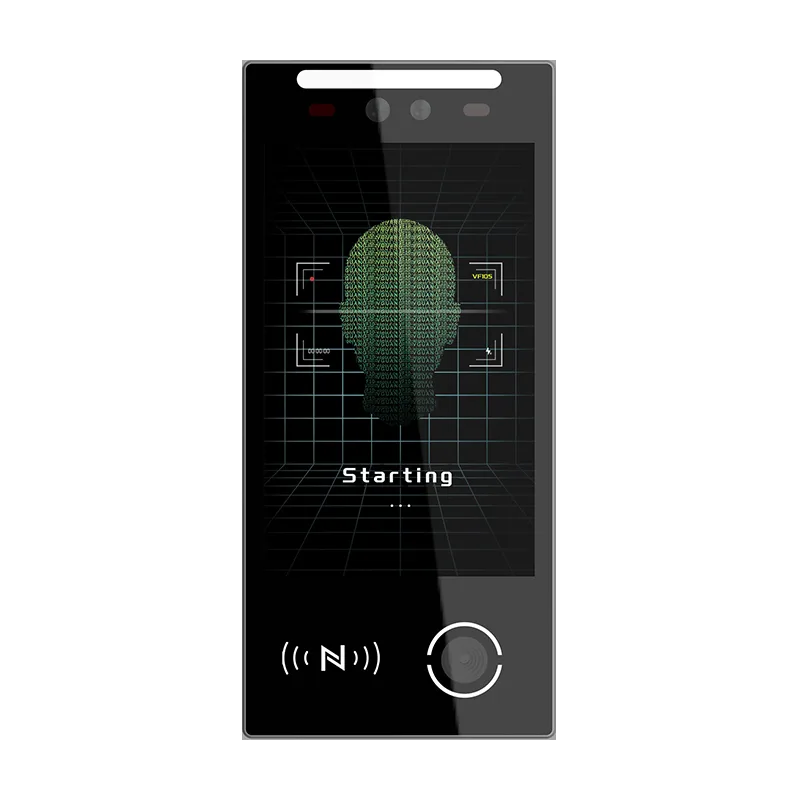
Face algorithms run on the device itself, with no cloud dependency for matching — usable on weak or offline networks. Exact capacity and recognition speed depend on the device model, algorithm version and on-site environment.
Rapid Delivery
Ship features like an app update — never re-flash firmware.
Sync code to the device to run; business iteration is no longer chained to firmware build cycles. App updates take effect after restart per the device flow — schedule them in a business window. Requirement changes can go live the same day — product trial-and-error cost drops from weeks to hours.